

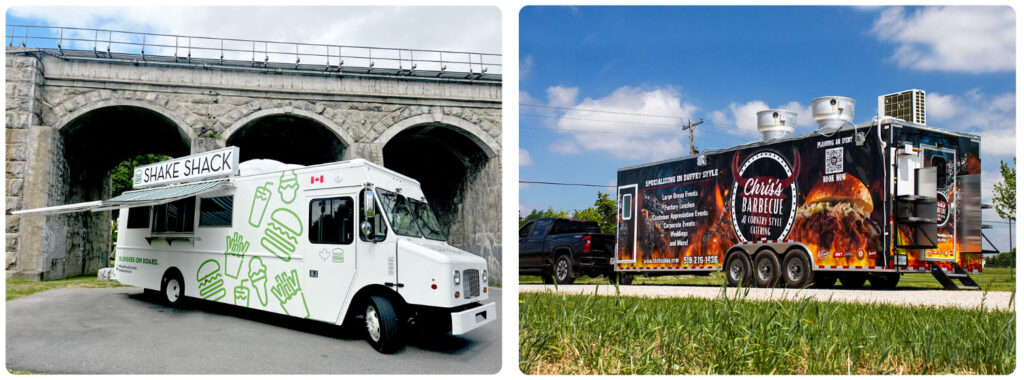
 Buying a food truck involves much more than choosing a vehicle and installing cooking equipment. Before you buy, consider the type of mobile unit, whether to choose new or used, your menu and appliances, kitchen layout, power requirements, local regulations and permits.
The right food truck should be designed around what you plan to serve, how your team will work inside the kitchen, and where you plan to operate. Here are eight important things to consider before purchasing a food truck.
1. Should You Buy a Food Truck or a Concession Trailer?
A food truck is usually the better choice if mobility is important and you plan to operate at different curbside locations, events or catering jobs. A concession trailer can be a more economical option when you expect to remain at events or permanent locations for longer periods.
The right choice depends on your budget, business model, towing requirements and how frequently you expect to move.
Example:
A business attending different lunch locations throughout the week may benefit from a self-contained food truck, while a vendor attending multi-day festivals may find a concession trailer more practical.
Learn more: How to Choose the Right Mobile Unit
2. Is It Better to Buy a New or Used Food Truck?
A used food truck may have a lower initial purchase price, but the condition of the vehicle, kitchen equipment, and existing electrical, gas, and plumbing systems should be carefully inspected.
Older food trucks may also require changes to meet current health, fire, electrical, or local operating requirements.
A custom new food truck gives you more control over the vehicle, kitchen equipment, floor plan and workflow from the beginning.
Example:
If an existing used truck was designed for coffee service but your business requires fryers, a griddle and a commercial hood system, modifying the existing kitchen may be more complicated than expected.
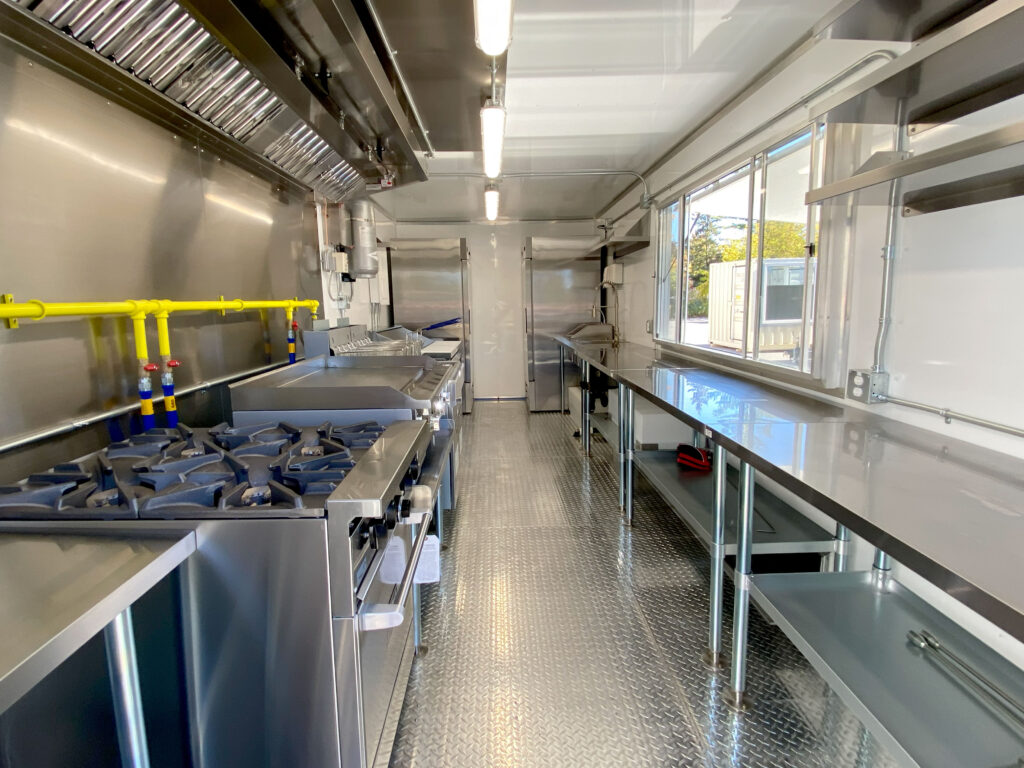
Related: View Our Custom Food Truck Gallery
3. Should Your Food Truck Use Gas or Electric Equipment?
The answer depends primarily on your menu and the equipment required to prepare it.
Coffee, smoothie and some light-food concepts may be able to operate largely with electric appliances. Food trucks that grill or fry food may require propane or other cooking systems in addition to electrical power.
Even when cooking equipment uses gas, electricity is still required for equipment such as refrigeration, lighting, ventilation and other systems.
Example:
A coffee truck and a burger-and-fries truck can require completely different electrical and cooking systems even if the trucks are the same size.
4. What Appliances Do You Need in a Food Truck?
Your menu should determine your equipment — not the other way around.
Before designing the kitchen, decide what you plan to prepare, cook, store and serve. From there, the required appliances can be identified and incorporated into the food truck layout.
A salad concept, for example, has very different refrigeration and preparation requirements from a truck serving French fries, burgers or grilled foods.
Equipment may include:
- Refrigerators and freezers
- Griddles and grills
- Fryers
- Ovens
- Preparation tables
- Sinks
- Commercial ventilation systems
- Food-warming or holding equipment
Related: View Food Truck Photos
5. What Storage and Accessories Should a Food Truck Have?
Storage and preparation space are especially important because every square foot inside a food truck matters.
Shelving, work surfaces and storage should be incorporated into the floor plan so employees can prepare and serve food without unnecessary movement.
Depending on the business, additional features can include serving windows, display cases, retractable awnings and exterior accessories.
Example:
Frequently used ingredients and utensils should be positioned near the appropriate preparation or cooking station rather than requiring employees to repeatedly cross the kitchen.
6. What Codes and Regulations Must a Food Truck Meet?
Food truck requirements vary depending on where the business will operate. Before the build begins, check requirements with the appropriate local health, fire, electrical and gas authorities.
Knowing these requirements early can prevent expensive modifications after construction.
Venture Food Trucks recommends determining the requirements for your operating location before finalizing the truck’s equipment and layout.
Learn more: Food Truck Licensing + Permits
Learn more: Food Truck Health Permit Requirements
7. Why Is the Food Truck Floor Plan So Important?
A good food truck floor plan should be based on workflow — from food storage and preparation through cooking, finishing and serving.
Because mobile kitchens have limited space, equipment placement can make a major difference in how efficiently employees can work.
Example:
If food moves from refrigeration to preparation, then cooking and finally to the serving window, the layout should support that sequence as naturally as possible.
At Venture Food Trucks, each custom layout can be developed around the customer’s menu, equipment requirements and operating needs.
8. What Permits Do You Need Before Operating a Food Truck?
Food truck permits and licensing requirements vary by municipality, province, state and operating location.
Before purchasing your truck, contact the local authorities where you plan to operate and determine what licenses, permits and inspections will be required.
Health-department requirements can also affect your sinks, equipment, food preparation areas and other parts of the kitchen design, so this information should ideally be gathered before construction begins.
What Should You Do Before Ordering a Food Truck?
Start with three things:
Your menu. Know what you plan to cook and serve.
Your operating location. Find out which health, fire and licensing requirements apply.
Your workflow. Think about how food will move from storage and preparation to cooking and serving.
Once those decisions are clear, your vehicle, equipment and kitchen layout can be designed around the business rather than trying to fit the business into an existing truck.
Ready to Build a Custom Food Truck?
Venture Food Trucks designs and manufactures custom food trucks, concession trailers and mobile kitchens based on each customer’s menu, equipment, workflow and operating requirements.